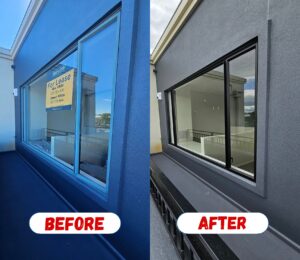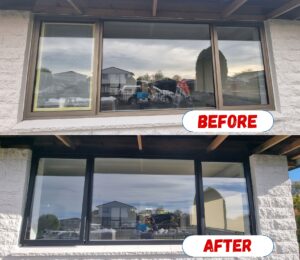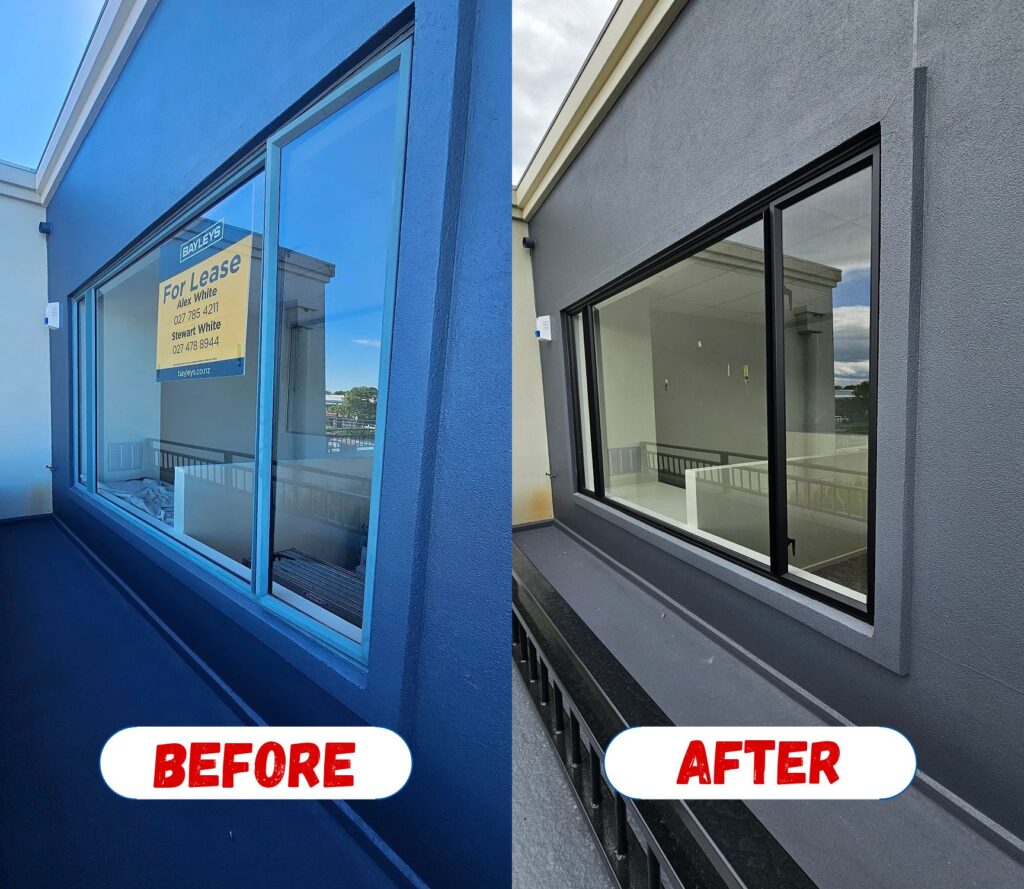
As window frames begin to dry out, crack and peel, it’s tempting to imagine that the window should really be replaced. Aluminium window paint peeling does not always mean that, though. Many homes have a damaged finish, but the frame underneath is still intact and is fine.
The actual problem is determining the reason for the failure of the coating. All of these factors can contribute to moisture, sun exposure, inadequate preparation, dirt, age, and the wrong products. A professional window restoration can often give old windows a new look and clean finish without the need to completely replace the entire window system if the cause of the trouble is addressed first.
This guide tells you what’s going on, what should be done when it’s peeling and how professionals deal with it.
Why is my aluminium window paint peeling?
A finish can fail for a number of reasons. The coating should adhere securely to the surface it is applied to. Any bond that is not tight enough can cause the finish to crack, blister, flake or lift off.
Common causes include:
Poor surface preparation
Any moisture that is trapped under the finish.Any moisture that is caught underneath the finish.
- Soil, oil/grease or other contamination
- Strong sunlight
- Long-term weather exposure
- An ageing coating
- Incorrect coating products
- Physical damage
- Poor application methods
How Do Paint Peels On Aluminium Window Frames Appear?
Symptoms aren’t always as dramatic as one might think. Small cracks around corners, or flakes along edges may be noticed. With time, they can expand and reveal more of the surface below.
Check for the following symptoms:
- Small cracks
- Raised edges
- Flaking
- Bubbling
- Loose sections
- Bare patches
- Chipped areas
- Uneven texture
- Faded sections
Sometimes a small damaged area does not indicate that the frame is broken. But do comprehensive damage estimates need to be made before the damage expands?
What is the difference between fading and peeling?
Fading is primarily a change in appearance. The finish is lighter or loses its original appearance but remains adhered to the surface.
Peeling is different. It is a sign that the coating is peeling off the material, and it could continue to flake off. The difference is an important one because each problem may be treated in a different way.
Peeling window paint on aluminium windows is a major issue?
Often it is just cosmetic. When the frame is still sound, and the windows open and close and seal properly, the problem may be that the finish is broken.
If the aluminium coating is left untreated and unsealed on a large scale, it can allow moisture and dirt to enter the surface. The longer the problem persists, the more preparation may be required later.
Will Peeling Affect the Frame?
Not necessarily. A bad finish does not necessarily mean the metal frame beneath it is in poor condition. You need to check the condition of the substrate.
A substrate is just the surface on which the coating is placed. If this base is correct, then restoration can still be achieved.
Can Peeling Paint on Aluminium Be Repaired?
In many cases, yes. This will depend on the size of the area and the condition of the existing finish.
Limited repair might be required on a small area of damage. If widespread failures occur, then a more thorough preparation and recoating will be needed. What is important is not to stuff the loose material and trust it will work out.
Can You Paint Over Peeling Areas?
This is typically not a long-term answer. If the old coating is already flaking off, the new one may just glue itself to the old coating. Upon removal of the old layer, the new layer may be removed as well.
What’s the best way to repair peeling aluminium paint?
A professional job normally starts with an inspection. The condition of the frames is first checked before deciding on the treatment. This lets you know if it’s a finishing problem or if there are underlying issues.
A process might involve:
- The existing surface will be inspected for damage
- Finding areas of failure
- Cleaning away contamination
- Removing loose material
- Preparing the surface
- Treating problem areas
- Use of primer as necessary.
- Once the finish is chosen, it should be applied as follows:
- Allowing the coating to dry and cure
- Checking the completed work
Removing Loose Coating
Careful attention needs to be given to any weak or flaking material. The intention is to build a solid foundation for the next phase. The amount of work varies according to the extent of the failure of the existing finish.
Cleaning the Surface
- Cleaning is used for the removal of dirt, grease, dust and other unwanted materials.
- This is crucial as contamination can disrupt adhesion.
- The surface should be appropriate for the following coating step.
Applying Primer
- A preparation layer which helps the coating system bond and serves as a base for the finishing layer is called a primer.
- Whether or not it is required will depend on the surface and products that are in use.
- The system needs to be selected according to the actual condition of the frames by a professional.
Why Surface Preparation Matters
Proper preparation is often the difference between a cosmetic solution and a proper restoration.
A poor base can never be covered with a new coat of paint. When some loose coating, grease, dust or other contamination is left underneath, the new coating might not hold.
What if you don’t prepare?
The new finish might seem to be attractive at first. However, issues may arise at a later stage. Cracks, lifting, bubbling, or additional flaking can be observed.
This is why it is necessary to consider preparation as an essential component of the project and not as an additional activity.
Does Paint Stick Well to Aluminium?
It can, but the surface should be properly prepared. Contamination, the existing surface finish, and the type of coating (system) applied all impact adhesion. Don’t assume that products labelled for metal are guaranteed to work.
What Affects Adhesion?
A number of factors can impact the quality of the finish adhered:
- Surface cleanliness
- Existing coating
- Oxidation
- Moisture
- Surface condition
- Primer selection
- Application method
- Drying conditions
Oxidation is a chemical reaction that occurs when a material reacts with oxygen. It may alter the surface of a metal and may need to be taken into account when preparing a surface for metal.
Should Peeling Aluminium Be Repainted?
If the frames are appropriate, it can be. If windows are still functional but the exterior finish has worn, become damaged or outdated, repainting may be appropriate. Prior to beginning work, an overall assessment of the window should be made.
When Repainting Makes Sense
Repainting makes sense when it is time to repaint the house.
A new finish might be a good idea if:
- Structural safety of the frames is guaranteed.
- Windows are still working fine!
- Damage is primarily in the form of shallow wounds.
- The current design is still appropriate for the property.
When Repainting May Not Be Enough
Not all damage can be remedied with a coating.
- Major structural damage
- Severe corrosion
- Cracked sections
- Serious distortion
- Failed components
- Significant water damage
It should be based on the condition of the entire window rather than the window’s appearance.
How to restore Aluminium Window Frames?
Aluminium window restoration is not the automatic replacement of windows but the enhancement of existing frames.
This may be helpful for older homes with a window system that is still in good condition.
Cleaning, preparation, repairs, priming and then a new exterior finish may be included in the process.
Is it possible to restore Aluminium Window Frames?
Yes, appropriate frames may be repaired. The issues which need to be addressed are whether the present system is still viable or not.
If it opens and closes without difficulty, and shows no major structural problems, then restoration could be a possibility.
What is Coating Failure?
If it fails to coat, the finish is no longer working.
It may manifest itself in various ways.
Common signs include:
- Peeling
- Flaking
- Cracking
- Blistering
- Chalking
- Fading
- Poor adhesion
The damage that can be seen is just one of the issues; why a coating failed should be determined prior to re-coating.
Does the Weather Cause Coating Issues?
Yes. The exterior frames are subjected to rain, wind and sun, temperature changes, and airborne dirt all year round.
These conditions can be stressful to the finish over time. Surface condition and maintenance should be focused on properties in areas with high weather exposure.
Rain and Moisture
It is not the rain that will doom a finish to failure. Water can infiltrate damaged areas or become trapped under a coating, which can cause problems. These risks can be mitigated by good preparation and an appropriate coating system.
Temperature Changes
As the temperature changes, frames expand and contract.
The finish may be stressed over many years through repeated movements.
The overall system performance will depend upon surface, products, application and environment.
How Can You Prevent Peeling From Happening Again?
There is no permanent exterior finish. But with proper care, it will maintain the surface’s appearance for even longer.
Keep the Frames Clean
Over time, dust and dirt can accumulate. Surface cleanings can help remove deposits from the surface and can make it easier to identify minor problems early.
Deal With Damage Early
Never overlook small cracks or chips. Checking early can help avoid the small problem from becoming a bigger restoration job.
Apply suitable coating products.
Products for exterior windows have to be suitable for those conditions. The coating system should be appropriate for the surface and the environment.
Don’t skip preparation.
You can’t have a good finish without a good base. If the paint job is well prepared, it can achieve a strong bond and provide long-lasting results.
How Is Repainting Different From Restoration?
These are occasionally used synonymously, but may refer to different levels of work.
Repainting typically involves a greater emphasis on the application of a new finish.
A restoration can be an extensive undertaking, such as an inspection, preparation, surface restoration and recoating.
Depending on the condition of the existing frames, the right solution will need to be implemented.
When Should Window Frames Be Repainted?
No one age fits all properties. Instead, pay attention to the quality of the finish.
If you see these, you might want to think about a job:
- Widespread flaking
- Repeated peeling
- Heavy fading
- Cracks
- Chalking
- Bare areas
- Lack of freshness and uniformity of appearance
It can be helpful to have an early evaluation to determine if a repair or a larger project is necessary.
Does Peeling Mean the Windows Need Replacement?
No. One of the most critical things for homeowners to consider. If the frames are still good and the problem is the finish, then Aluminium window restoration may be a viable solution.
If it is a full window system you are looking to replace, it may be more practical to try to see if the existing window systems can be repaired first.
There are situations when re-coating may be sufficient to protect the surface.
When Recoating May Be Enough
Recoating might be appropriate when:
- Frames remain strong
- Windows work correctly
- The problem is mainly cosmetic
- The existing design is suitable
- You’re looking for a different look.
- There is no major structural damage.
When Replacement May Be Worth Considering
While replacement may not always be advised, there are some cases in which it is considered appropriate.
Sometimes a new system can make more sense if the existing units have major structural issues, or the property is no longer using the units for its intended purposes.
Where major changes to the building openings are planned, this may also be considered. It is important that this choice be based on window condition and not on fear due to some damaged window locations.
How Much Does It Cost to Fix Peeling Window Paint?
The price of each project will differ from the standard.
The total cost can be influenced by a number of factors:
- Number of windows
- Frame size
- Condition of the existing finish
- Amount of preparation
- The inability to gain access to the frames.
- Masking requirements
- Repairs
- Coating system
- Number of coats required
How Long Does Window Restoration Take?
The time is determined by the size and condition of the project.
It might be easier to prepare a smaller house that has easy access to the outdoors than a larger house with numerous openings and much preparation.
Other factors include:
- Surface condition
- Weather
- Access
- Preparation
- Drying time
- Curing time
Curing is a process to allow the coating to harden and to attain the required performance. This is a crucial step and should not be hurried.
Final Thoughts
When window finishes are peeling, it can spoil otherwise great properties. What’s more important, however, is that if the surface fails, it will expose the surface below to moisture and additional weathering.
Replacement is not the first option. Find out what caused the failure and check the condition of the frames.
If the windows’ integrity is intact, it may be possible to prepare and recoat the existing windows to improve their appearance and prolong their useful life. Newlook Coatings is able to offer professional window and joinery coating and restoration services to the following sites.
When it comes to deciding between home options in Queenstown, Wanaka or Christchurch, a good assessment will make the choice just a little easier. It assists you in comparing restoration, repair and replacement options based on the actual condition of your windows and not just based on the look.
Frequently Asked Questions
Is it possible to repair the peeling paint on aluminium?
Often, yes. Before beginning the restoration, the frames should be inspected to ensure that the surface underneath is appropriate for the restoration.
Is Peeling Aluminium Fit For Repainting?
It can be however, loose and failing material must be adequately prepared prior to use. It goes without saying that painting directly over unstable areas can result in another failure.
How Do Professionals Fix Peeling Aluminium Paint?
The following are some of the methods used by professionals to repair peeling aluminium paint. They examine and assess the current finish, remove any unstable material, clean and prepare the surface, apply primer if necessary, and apply an appropriate coating system.
Is it possible to repair Aluminium Windows?
Yes. If the original frame structure is still very sound and functional, then there is the possibility of restoration.
Can I Fix Small Peeling Areas Myself?
Simple cosmetic issues can be tricky to match and to prepare the surface properly. Professional assessment is typically the first step to take if damage is extensive.